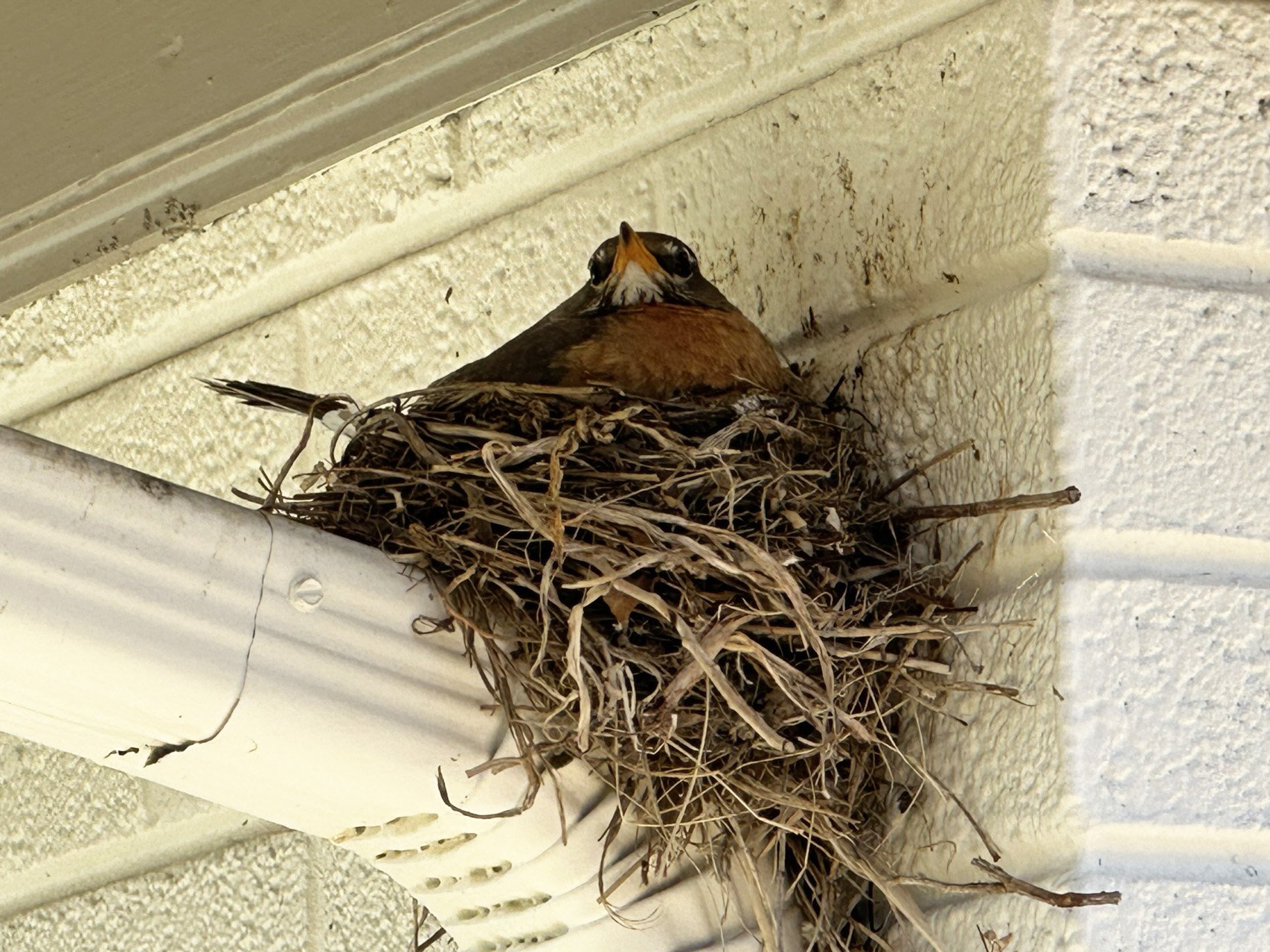
In search of a nest?
The house is ready for pALS.
If you - or someone you know - has ALS and is looking for a place to live - please reach out to us! We are happy to share more details about renting our house. raggedyclan@gmail.com
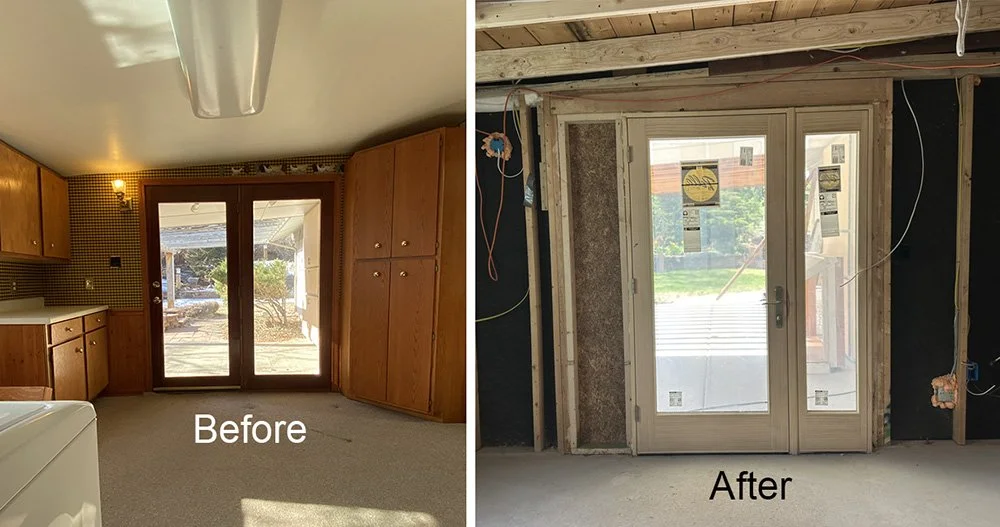
Patio Door
Replacing an exterior door with a new wide, zero threshold door.
What becomes really obvious, really fast, when using a wheelchair is how many doors are not wheelchair accessible! In this house, we opted to replace many of the doors to make the house easier to navigate. Replacing the exterior door in the laundry room felt important - it had three problems: 1) it was too narrow, 2) it swung in such a way that it was difficult to use as you approached it in a wheelchair and 3) it had a very large threshold that was difficult to get over with wheels. This door was also the primary access to the backyard. So, we removed the door and donated it to Bud’s Warehouse in Aurora, Colorado. We adjusted the height of concrete floor in the laundry room so that we could put in a zero height threshold Pella door. And we replaced the original door with a wider door that swung open in such a way that a wheelchair user could more easily travel to the backyard.
Sometimes, we associate “accessible features” with gear like ramps or handrails - but it is important to remember that subtler decisions - like the size of a door, or the height of its threshold, or the direction that the door swings - can make the difference.
Plants vs Concrete
How can we make the garden accessible?
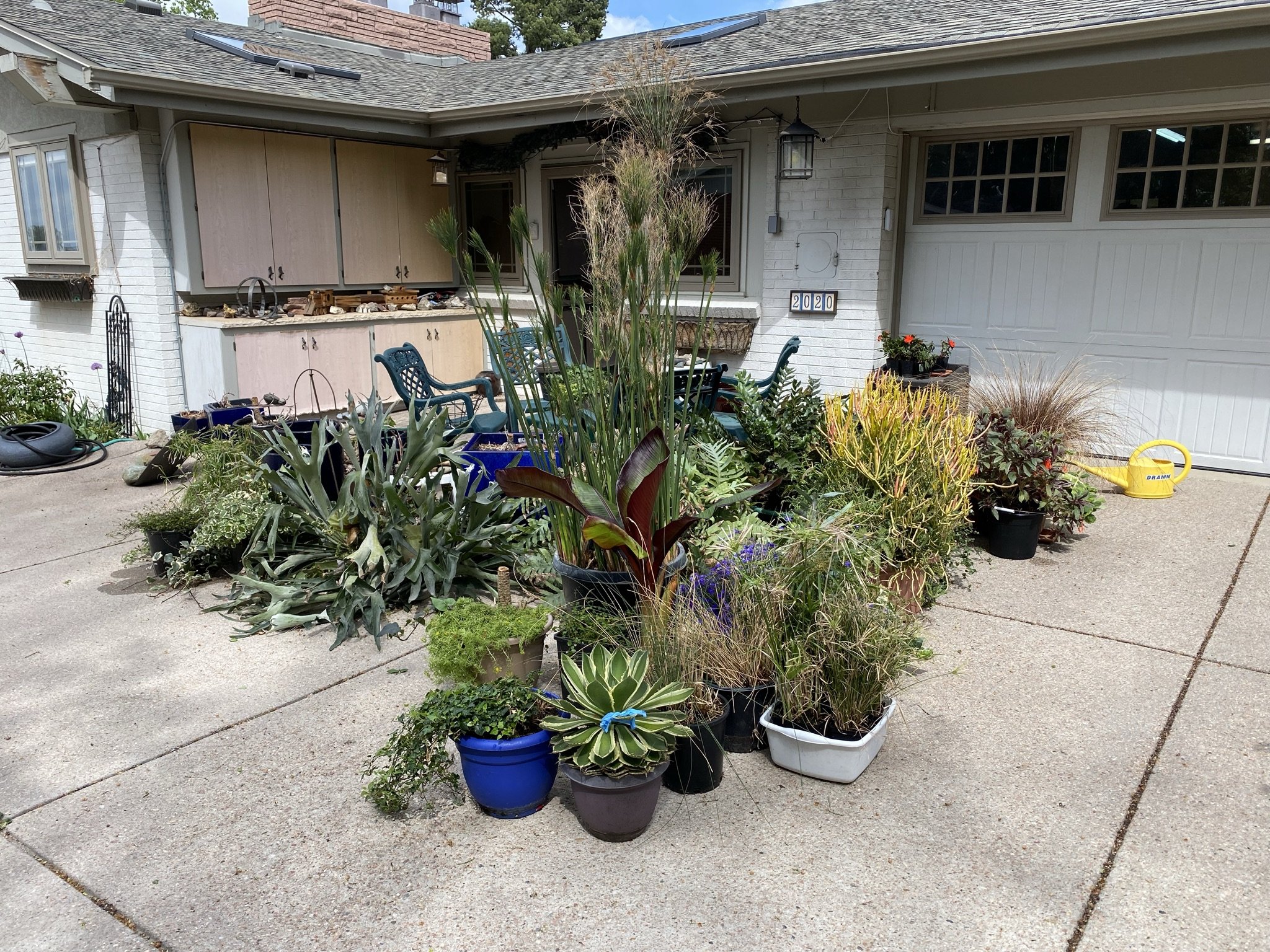
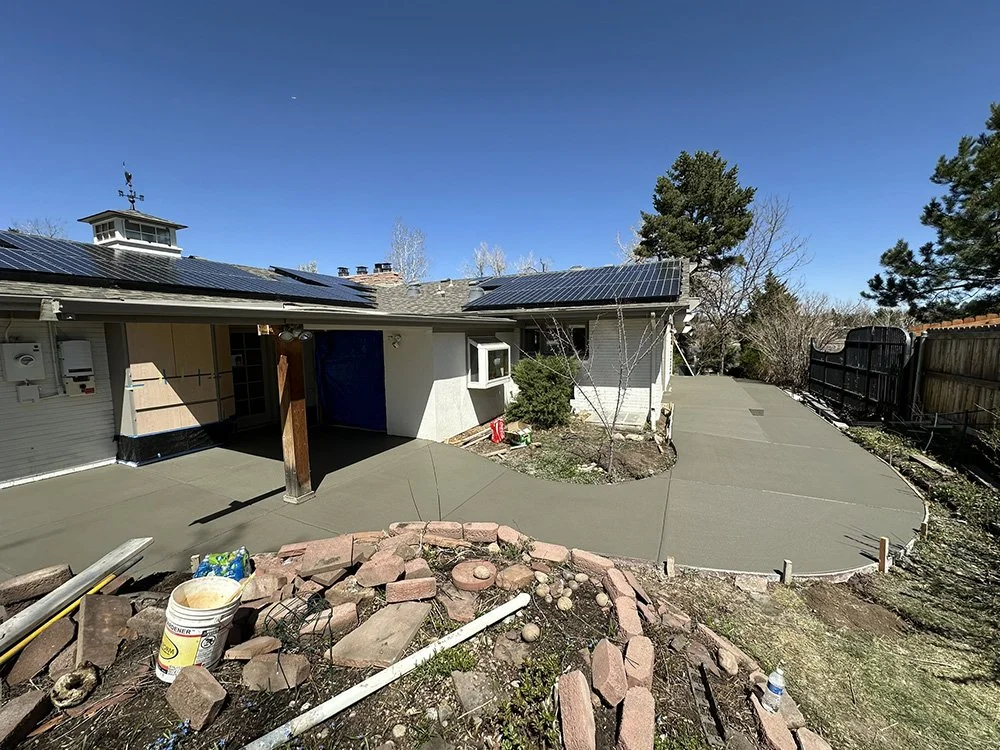
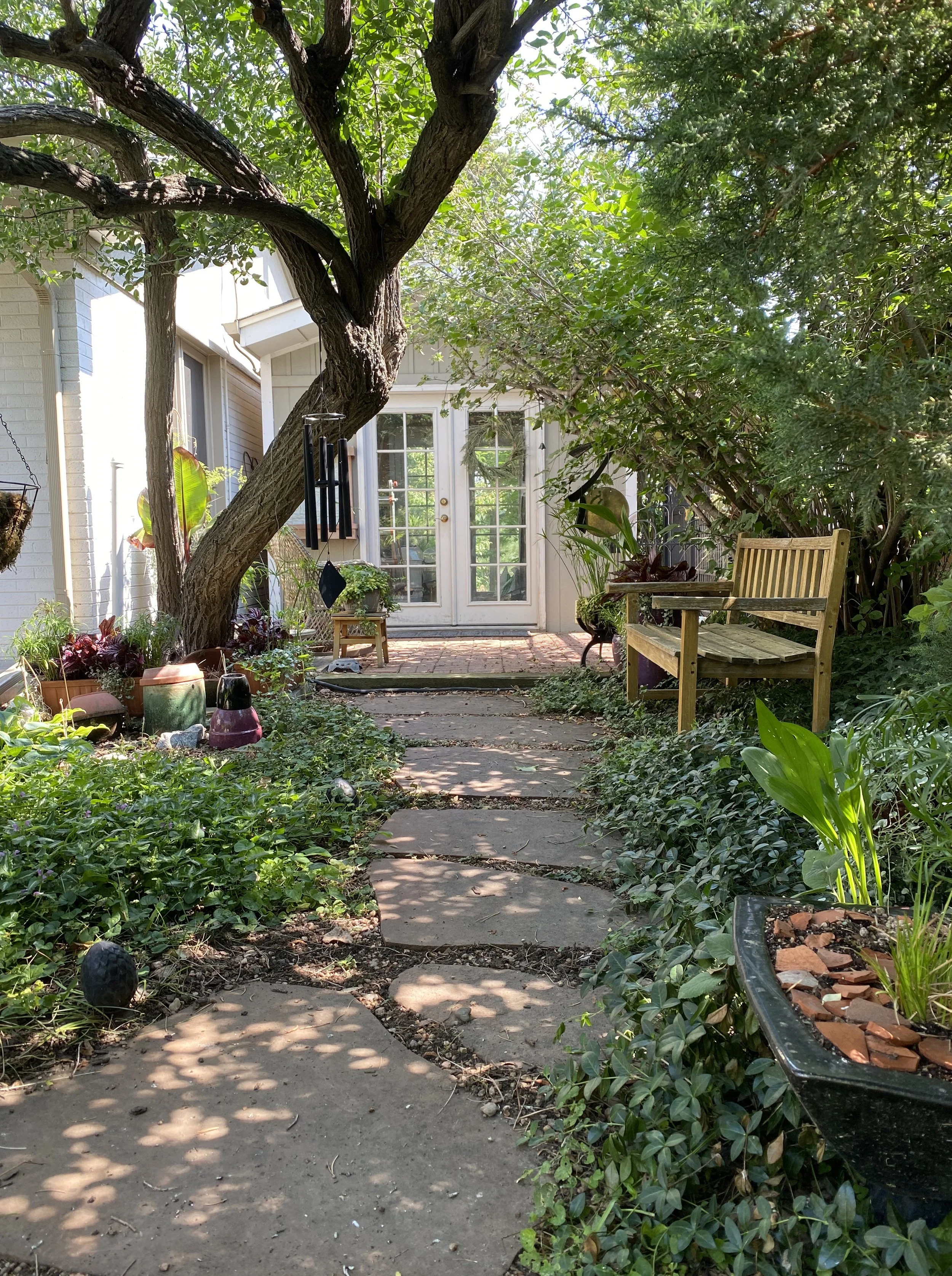
We cannot lie: for most of its life, there has been a battle between plants and concrete at the Raggedy House. When Ann was still alive, the plants were heavily favored. It was with a heavy heart that we decided some of the plants (2405 sf to be precise), needed to go to make the outdoors more accessible.
We chose to add concrete paths because there’s really no comparable material for creating smooth paths in the yard. That said, we tried a lot of alternatives before resorting to concrete.
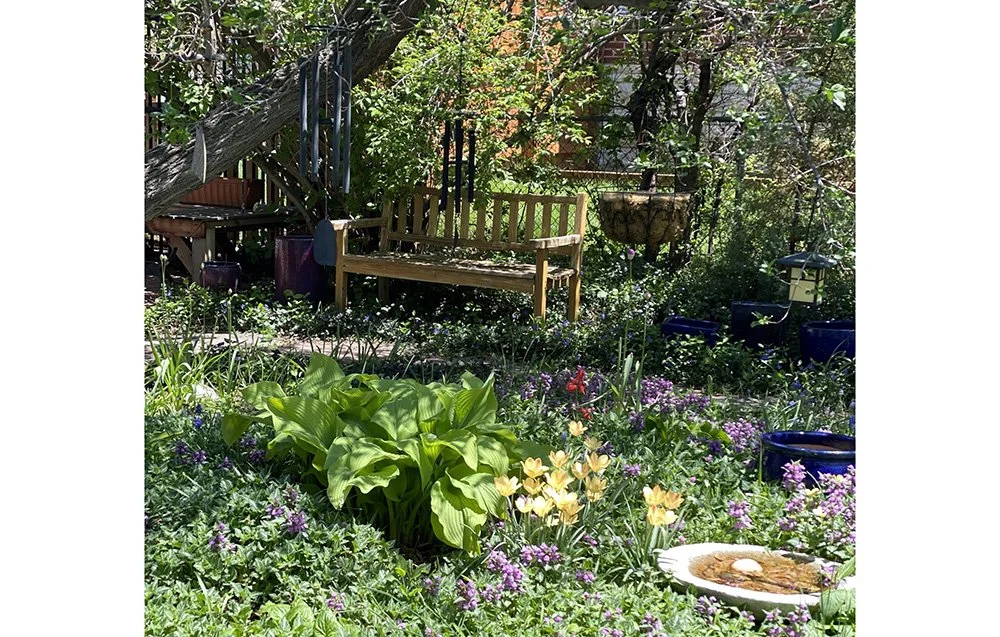
There were benches, because just sitting in the yard was, hypothetically, going to be enjoyable. But it was awfully hard to access those benches.
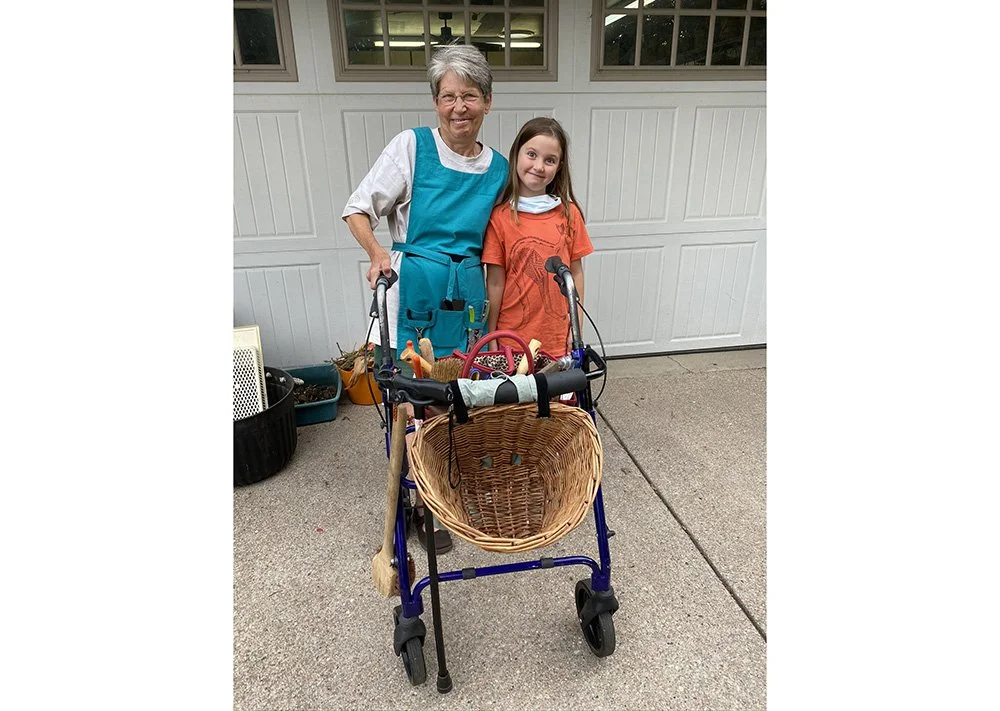
There was a fancy apron and walker modifications.
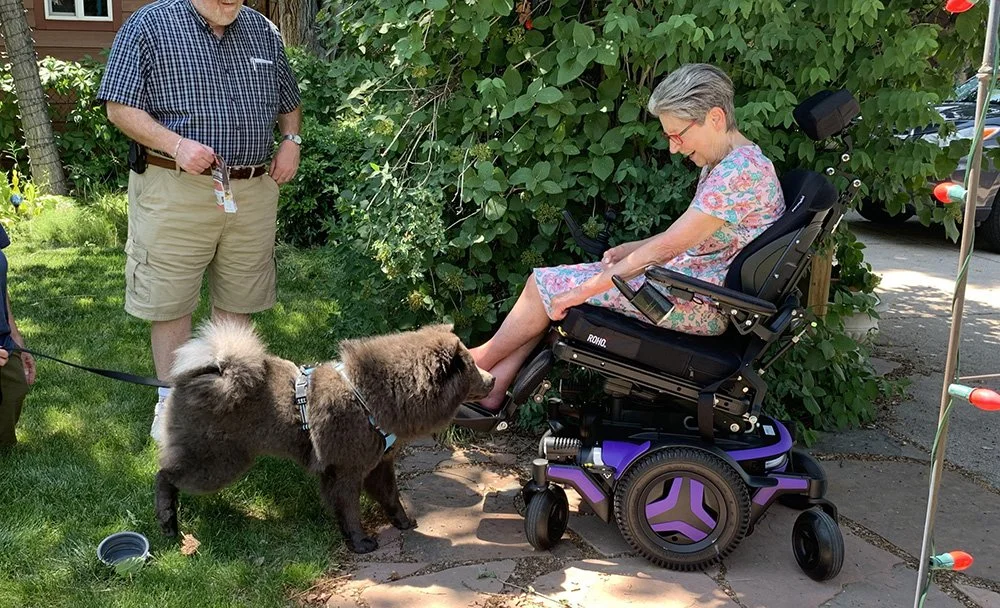
There was Curtis, who painstaking installed sandstone pavers under Ann’s watchful eye. Yet the wheelchair mostly stayed on the driveway.
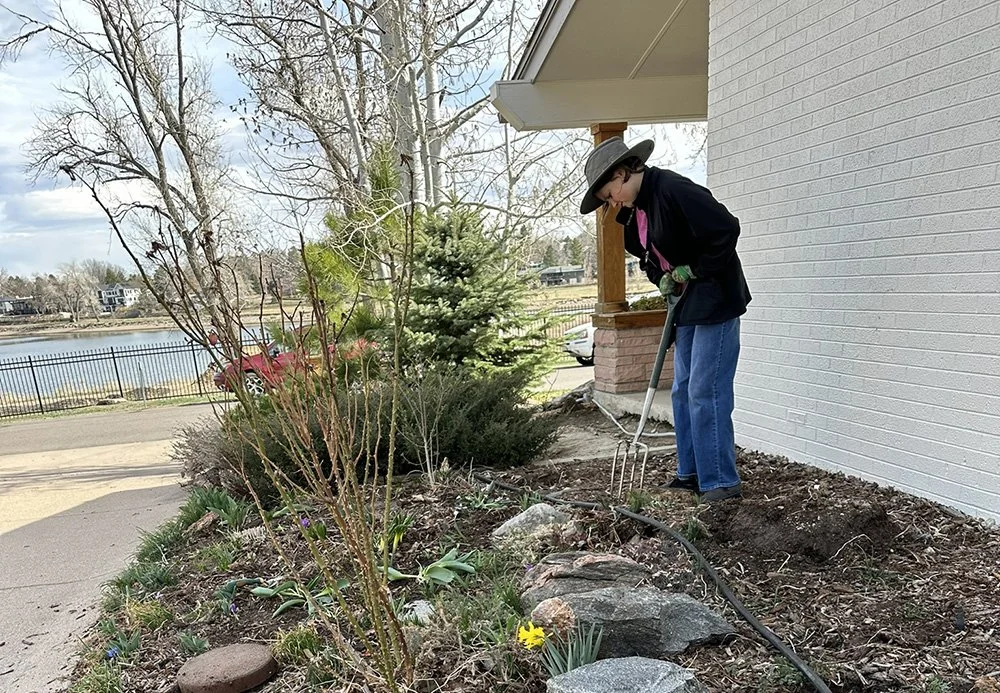
In March, we replanted as many flowers as we could and then closed our eyes and poured lots and lots of concrete.
Determination
For nonprofits, it takes some determination to get a Determination.
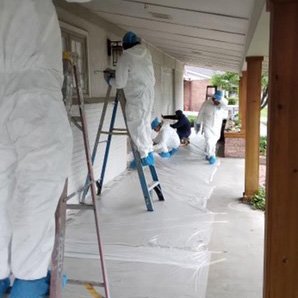
The process of becoming a nonprofit - also known by the IRS designation 501(c)(3) - can be long. First entities must form. Then entities have 27 months to complete and submit their paperwork to the IRS. One lawyer described the process as: the IRS gives nonprofits a long time to complete their paper work because the IRS wants it done right. The determination is retroactive: meaning that once the entity is determined to be a nonprofit by the IRS, it is a nonprofit since its formation.
It is our great pleasure to announce today that we have officially received our IRS determination letter as a nonprofit. We are no longer “pending,” but rather a full fledged 501(c)(3). We are also very excited to have obtained the designation of private operating foundation. Private operating foundations are slightly unusual nonprofit types. We hope that that this designation will allow us to focus specifically on our core mission of providing housing to people as opposed to, say, fundraising.
Ode to a Grease Jar
Ruminations by Ann
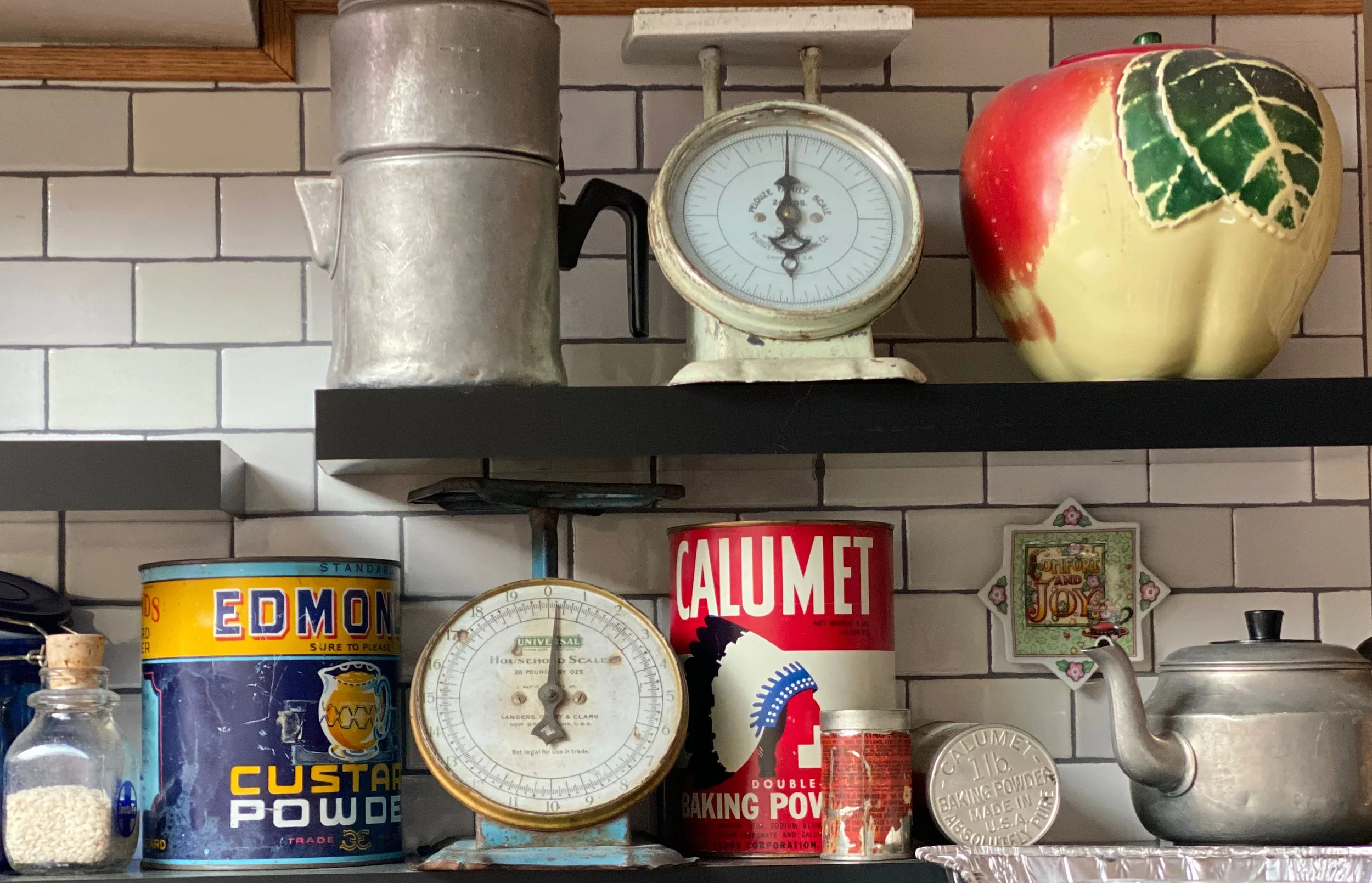
You lived in my Grandma’s house.
You were in my life
because I was in hers –
her house and her life and her heart.
Then you came to live with me
along with your friends
SALT, FLOUR, and SUGAR
because she no longer
had a house (or a need for you),
but I did.
And we used you,
Richard and I,
and that is how you came
to be broken…
in the service of the use for
which you were intended.
We were sad – very sad.
Richard tried to mend you
with magic and super glue
even as we left remnants of
the grease that had broken you
still clinging to your patched and
fractured walls.
Maybe they would remind you
of your purpose and service and
make you whole again.
Then again, maybe not.
Even purpose does not bestow immortality.
Ann Brandenburg-Schroeder
10/19/2019 (1 month after her ALS diagnosis)
Accessible Doors
Strategies for making doors more accessible.
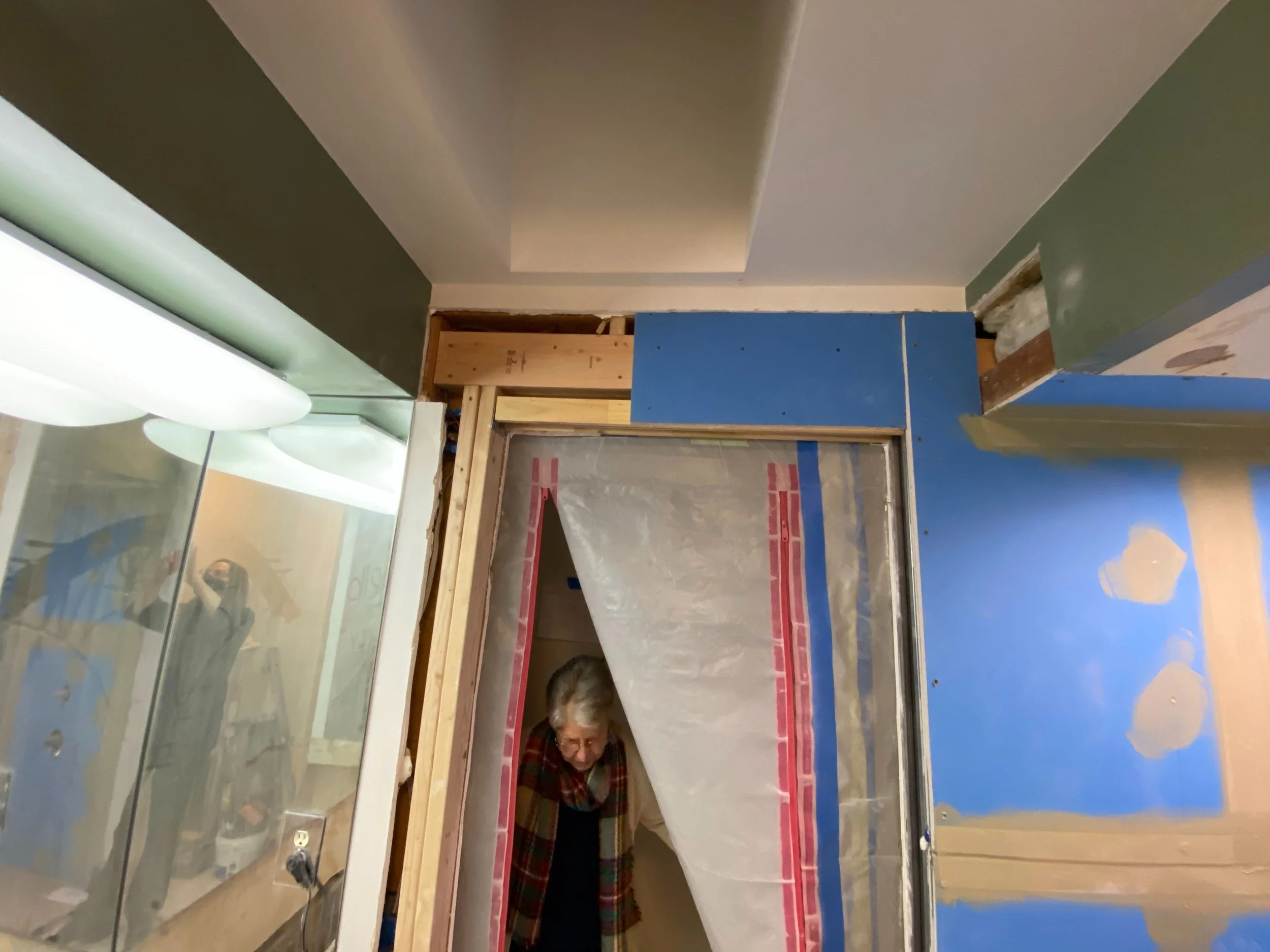
One of the first renovations to the house was in the winter of 2020, when doorways were widen to accommodate the wheelchair. Widening the doors was critical to allowing them to be used. However, sometimes widening doors is not very straightforward. Adjacent walls or corners or even the swing of the door often meant that simply widening the door was not sufficient to create the accessibility that we wanted. In both the 2020 renovations, and in the current renovations, we had to evaluate different strategies to make different doors accessible. Among the strategies:
Changing the swing of a door. If a door swung into a narrow hall, it might make sense to flip the swing so that is swung into a (larger) room.
Installing pocket doors. These eliminate the door swing, but creates accessible handle hardware challenges. They also require double the amount of wall length to install.
Installing barn doors. Easier to install than a pocket door and eliminates the door swing, but still has handle challenges and requires a significant amount of wall length. The hanging door also accumulates more damage than a pocket door because of its exposed location.
Installing off-set hinges. These can squeeze another 1.5” inch out of an opening by allowing the door to swing further “out” of the door frame.
Accepting that some doors would simply not be accessible to everyone. This one was hard, because we would like all doors to be accessible to everyone! But one important reality of living with ALS is that, eventually, everyone needs help. Allowing that some doors would be “caregiver doors only,” helped us maximize the access and comfort not just for the person with ALS, but the caregiver as well.
Threshold ramps. Once you are wheeling around everywhere, you realize how many little changes in elevation exist in the average house. Rubber threshold ramps helped quite a bit. Although this is not widening a door, the ability to roll through a door smoothly makes all the difference when navigating a particular narrow opening.
ADA, the Americans with Disabilities Act, lays out specific measurements and rules for making spaces wheelchair accessible. They are a great starting point, but there’s a lot more to think about! We found that sometimes some clever ingenuity can outperform the ADA measurements. And almost always the ADA’s criteria assume a level of independence that doesn’t consider a caregiver. We are trying to keep this in mind as we remodel the house.
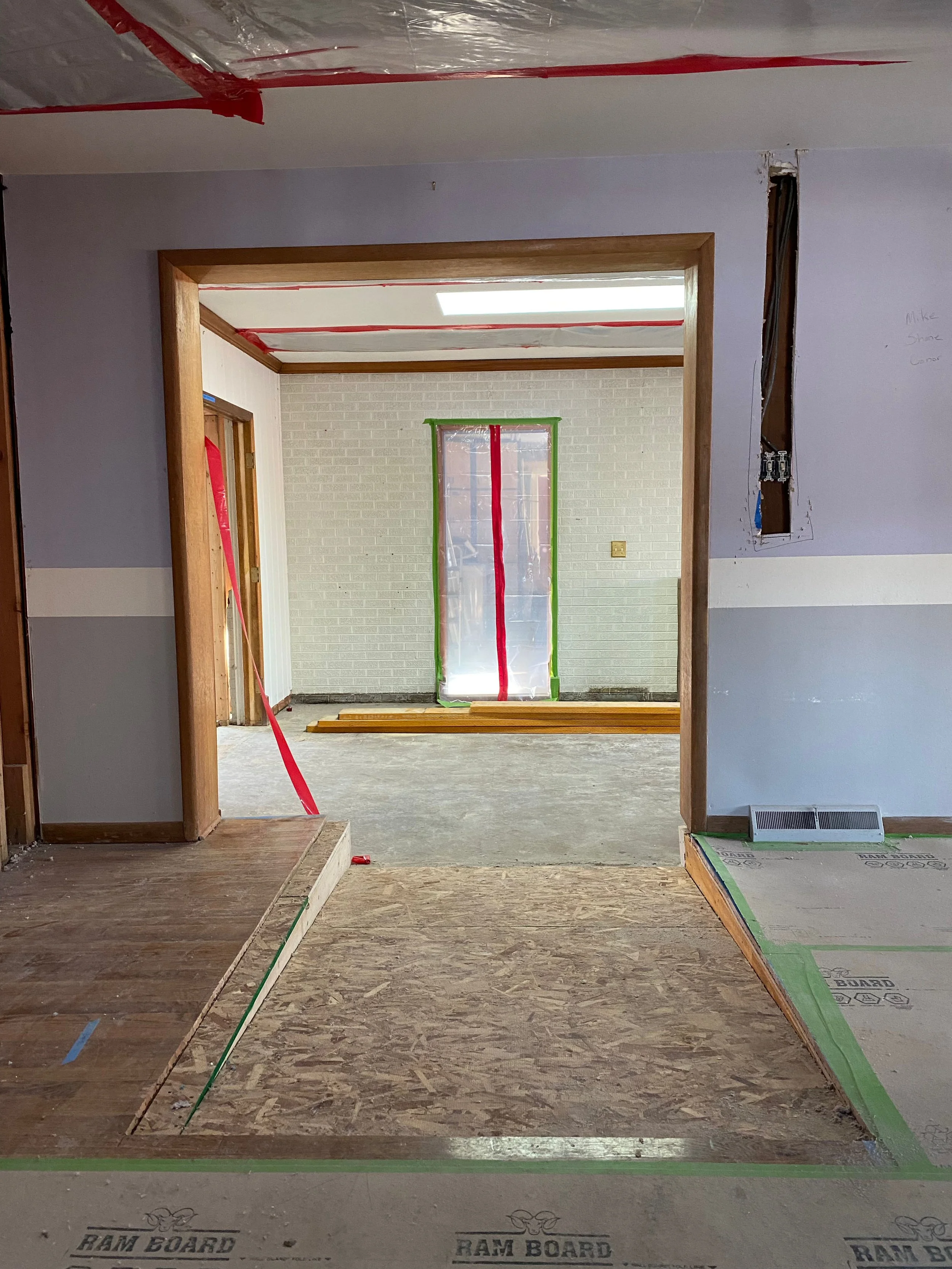
This is why we are here.
The ramp is in!
The ramp is in! This ramp, right here: THIS is important.
The appliance delivery people asked me yesterday if they need to deliver the appliances up any stairs, and I was thrilled to say,
“No. Not one single stair. “
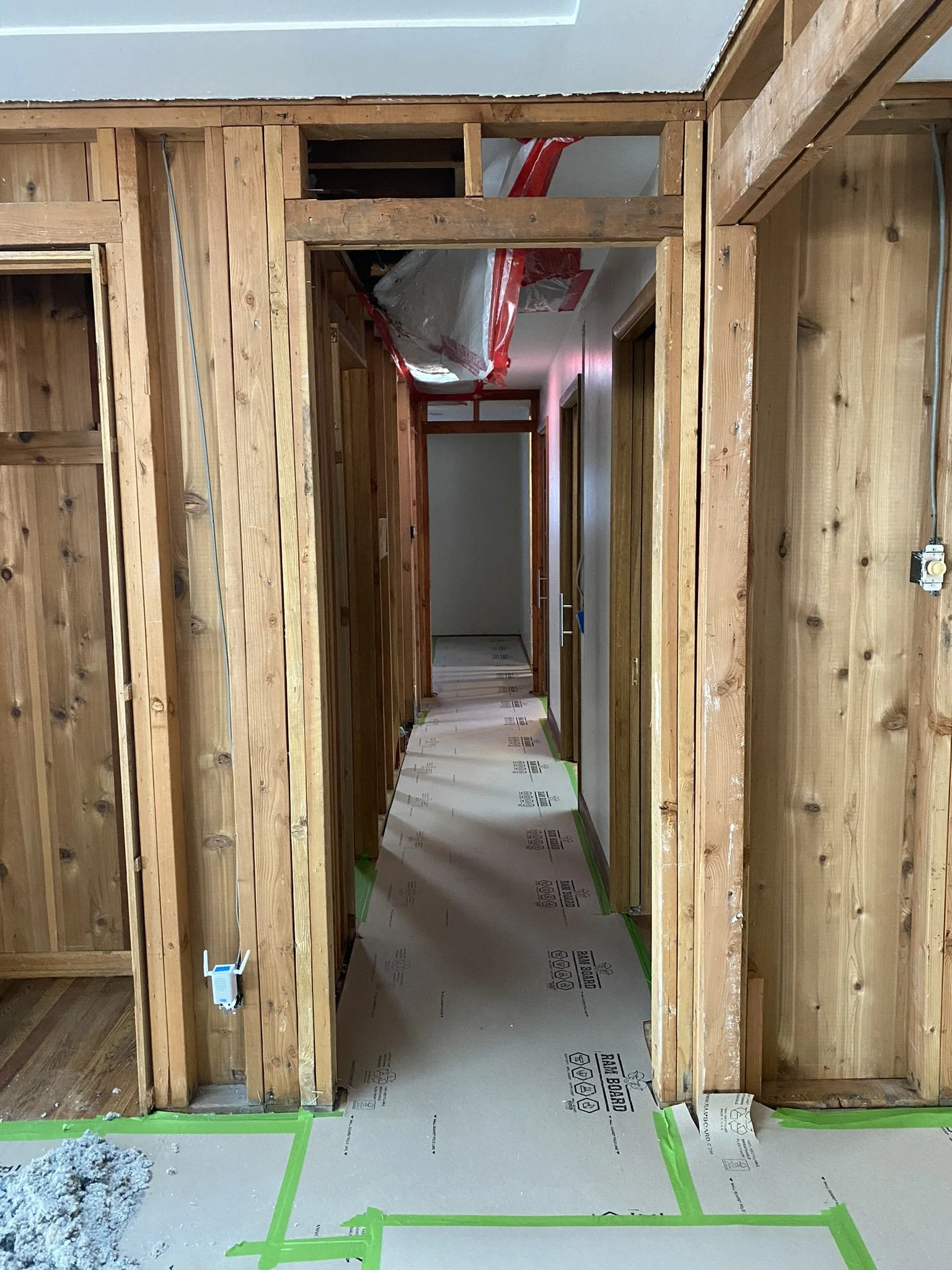
Mobility is not static
Widening the hallway.
One of the biggest changes we will be making to the house will be the widening of the hallway. At exactly 3’ wide, it was a squeeze to maneuver down the hallway in a wheel chair and then turn to make it through a 30” door. Our new hallway will be 4’ wide, with 3’ wide pocket doors entering into the rooms. This widening is a predictable change.
However, we’ve also been thinking about types of mobility, not just the wheel chair type. Sometimes, it’s nice to have a space that is not too big - especially if you want to reach out and lean against a wall for support. We think about how Ann loved her U-shaped “two butt kitchen” which had ample counter space for grabbing a hold whenever you need it. We think of the occupational therapists who asked about “furniture walking” in the early days of the disease. We hope to accommodate mobility beyond a single stage. We think that will be a little less predictable - and we look forward to sharing what we’ve come up with.
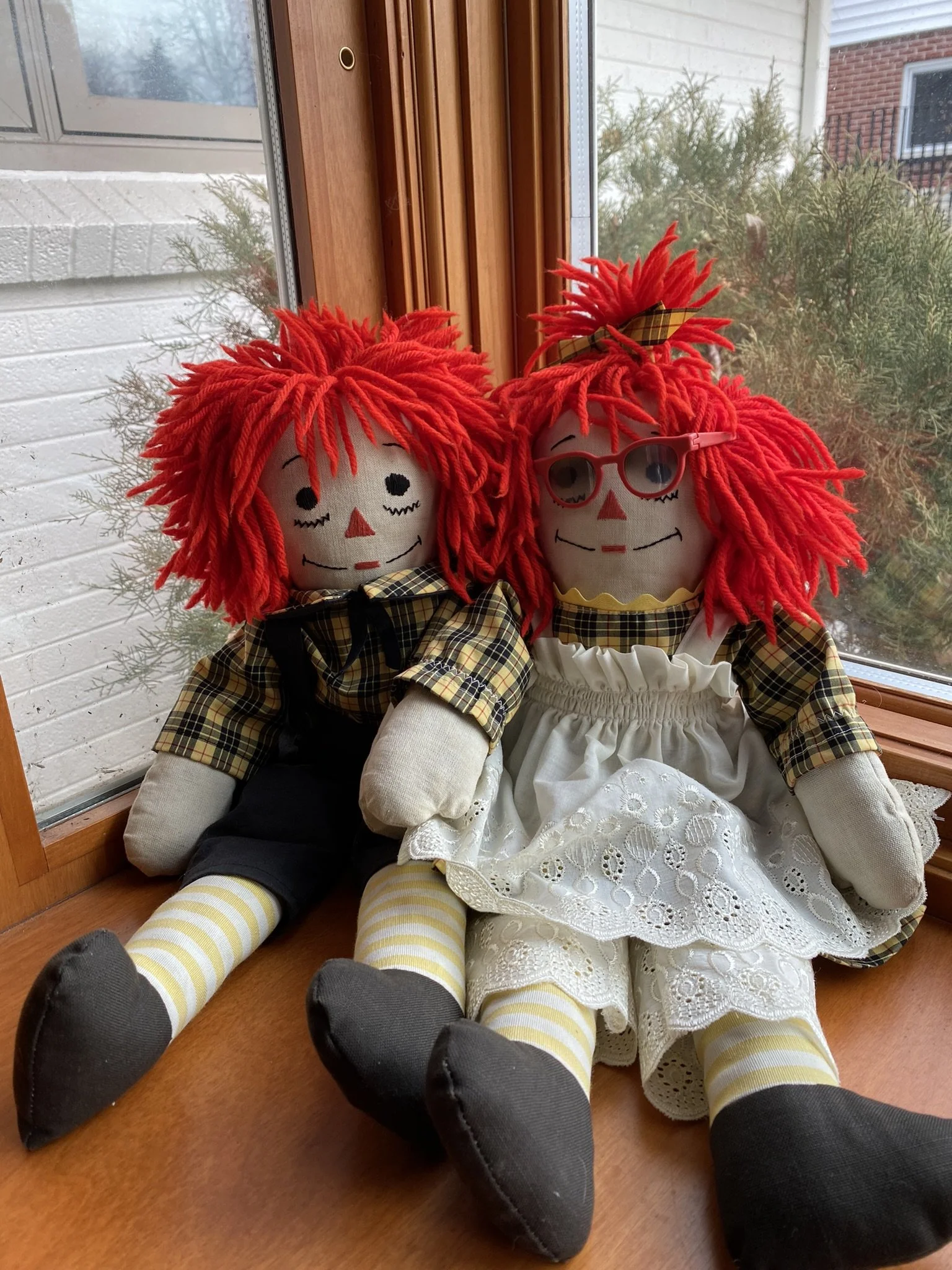
Big Changes
A thousand little details make a house a home.
We are ending the year 2022 with the major demolition work done. Ann would not be very happy right now - to see the house stripped of so many details! The cupboards in the garage are full of pieces she collected over the years that we hope to bring back into the house. For example, two Raggedies, dressed to match a wall paper that we had to remove. They are little, but hopefully they are the little things that will make the house feel like someone’s home.
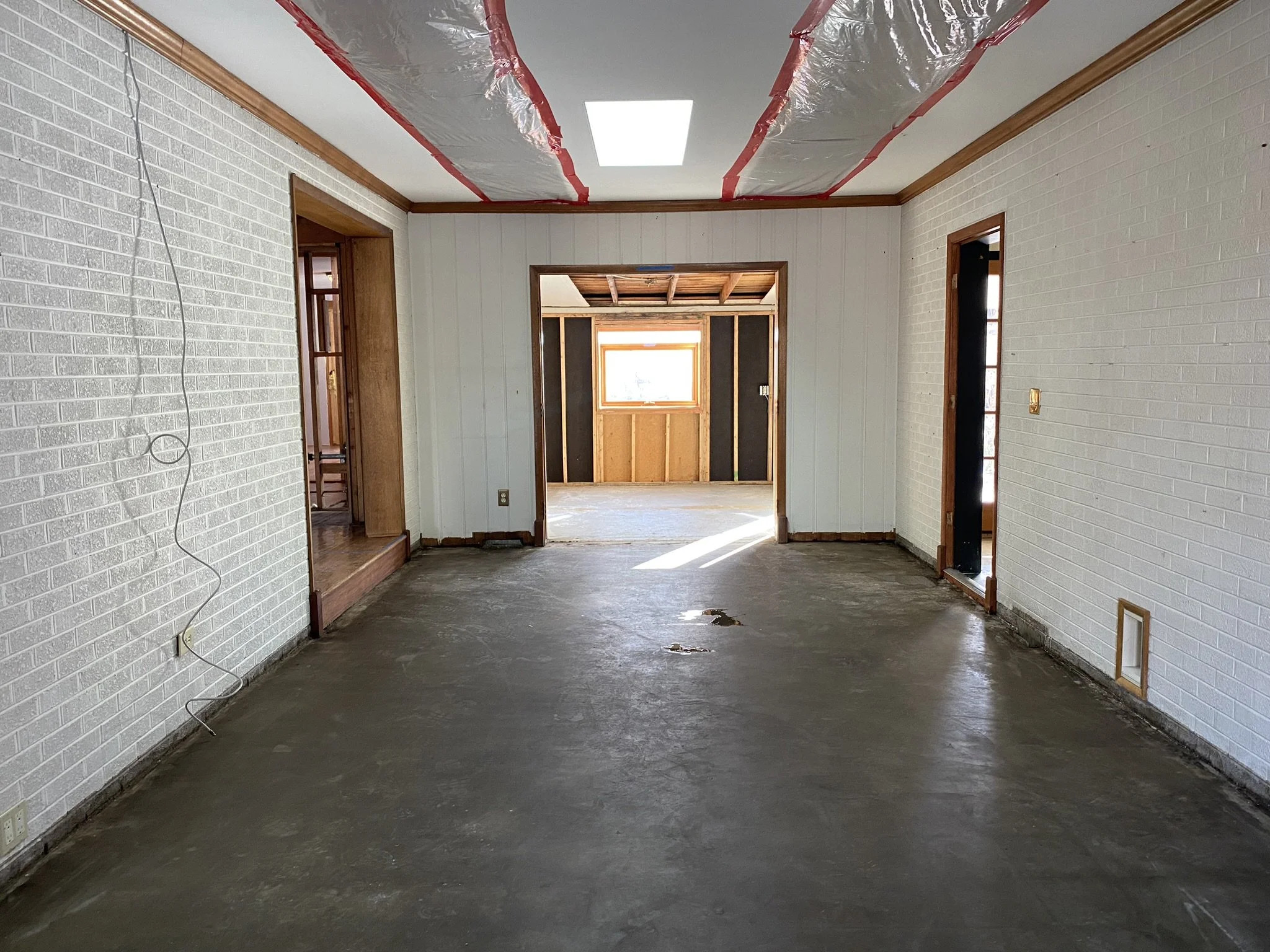
7 Inches
One small step.
There is only one step in house. Just 7 inches.
“It’s the perfect house for aging in place!” we said, back before we knew what it might mean to transverse a single step with a cane or with a walker or in a wheel chair.
That little step became a huge step.
***
At first, we thought we could split the difference of the seven inches.
“We’ll make a half-way step!” We stacked carpet tiles to the halfway point. “Now, you can use your cane, and lift your foot only 3.5” (twice). It will be easier to transverse the step.”
***
When the stack of carpet tiles started to seem a little slippery, a relative made a lovely 3.5” high box from wood. He routed the edges. Sanded the planes. Stained it to match the other wood in the house.
***
Then we needed a hand rail. Something to hold onto.
“No problem!” said Ann. “I know how to rock climb. I’ll just use the hand holds on the brick wall!”
“What hand holds?” my 7 year-old whispered.
***
“Maybe you can use the walker?” I suggested.
“It’s heavy, “ said Ann. “ I need to carry things in my hands. And I can’t lift the walker that high.”
***
We got a temporary metal ramp. It folded up like an origami crane. Heavy and complicated, its location began to feel permanent.
“I don’t like this ramp,” Ann said.
“Why not?”
“It’s slippery. The incline feels dangerous. It’s ugly. It’s in the way. It doesn’t have a handrail. I can’t use my hand holds on the brick wall.”
“Maybe you should use the wheel chair when you use the ramp.”
“I don’t like the wheel chair. And I want to walk as long as I can. Use it or lose it.”
***
Then there was the day the power wheel chair went off the side of temporary ramp. Over 400 pounds of wheel chair and human, suspended 3 inches in the air, unable to to move. Two petite women with suddenly superhuman strength lifted that wheel chair back onto the ramp.
“We don’t like that ramp,” they said.
It’s real. It’s happening.
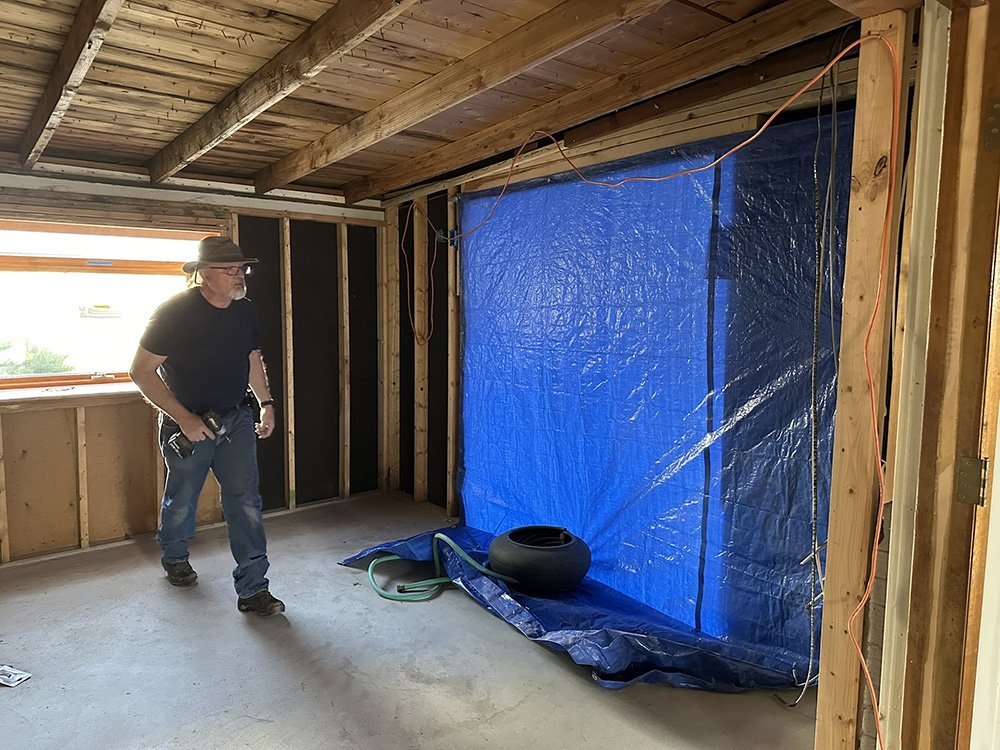
We begin remodeling!
The idea for Raggedy Clan - a place where people with ALS could live - was born in the fall of 2019. But the reality of Raggedy Clan - the ACTUAL nonprofit that would run it, the ACTUAL remodeling of the house, the ACTUAL people who will live at Raggedy Clan - this reality is taking time.
Some parts of the process have felt pretty abstract. For example, deciding whether Raggedy Clan would be a public charity or a private foundation. Or completing the paperwork for the IRS 501(c)(3) application. Or obtaining the insurances.
Other parts, like the remodeling feel very concrete! Maybe it’s the solidness of remodeling that has finally got us blogging. It’s time to start sharing the journey.