Accessible Doors
Strategies for making doors more accessible.
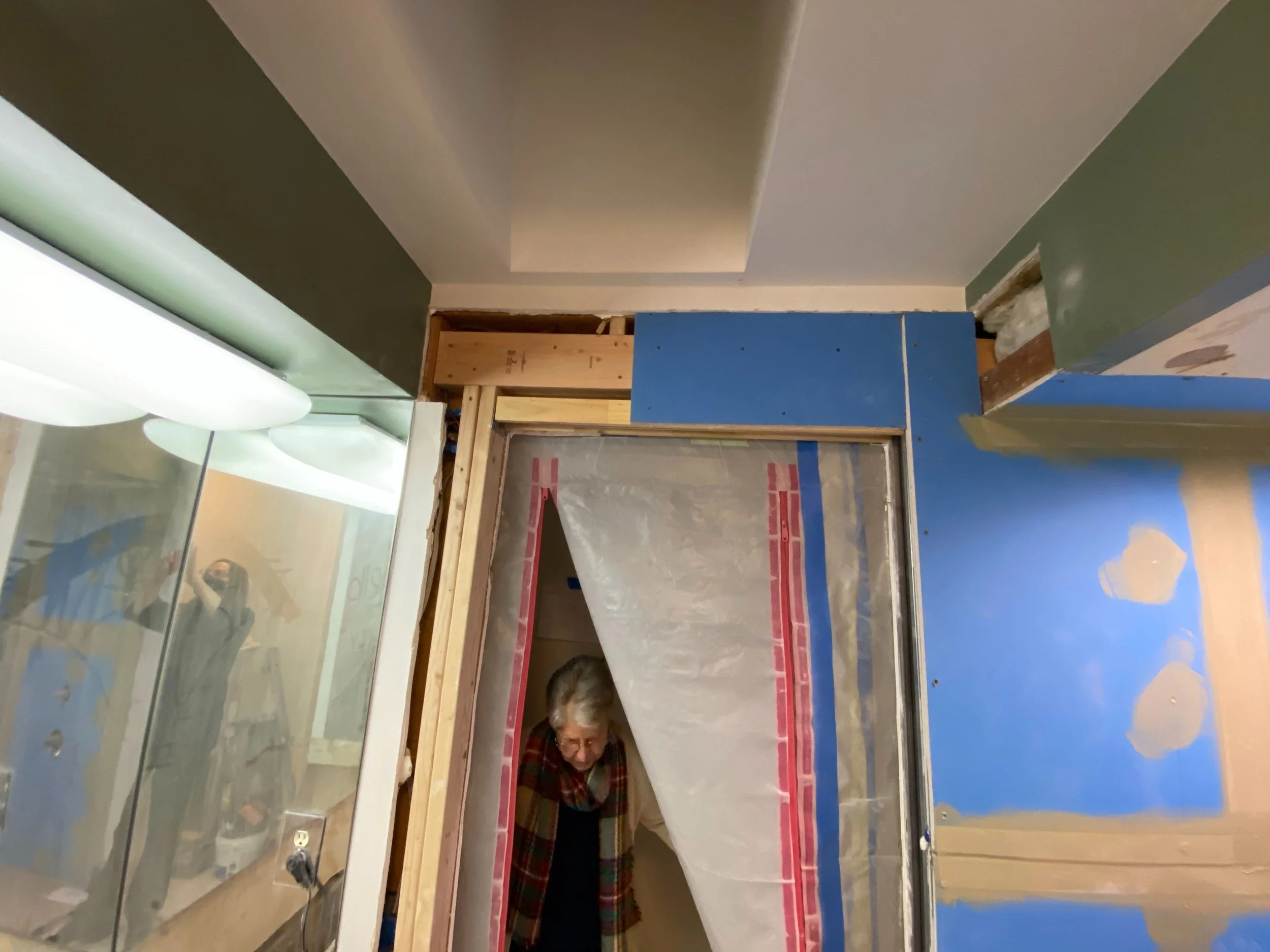
One of the first renovations to the house was in the winter of 2020, when doorways were widen to accommodate the wheelchair. Widening the doors was critical to allowing them to be used. However, sometimes widening doors is not very straightforward. Adjacent walls or corners or even the swing of the door often meant that simply widening the door was not sufficient to create the accessibility that we wanted. In both the 2020 renovations, and in the current renovations, we had to evaluate different strategies to make different doors accessible. Among the strategies:
Changing the swing of a door. If a door swung into a narrow hall, it might make sense to flip the swing so that is swung into a (larger) room.
Installing pocket doors. These eliminate the door swing, but creates accessible handle hardware challenges. They also require double the amount of wall length to install.
Installing barn doors. Easier to install than a pocket door and eliminates the door swing, but still has handle challenges and requires a significant amount of wall length. The hanging door also accumulates more damage than a pocket door because of its exposed location.
Installing off-set hinges. These can squeeze another 1.5” inch out of an opening by allowing the door to swing further “out” of the door frame.
Accepting that some doors would simply not be accessible to everyone. This one was hard, because we would like all doors to be accessible to everyone! But one important reality of living with ALS is that, eventually, everyone needs help. Allowing that some doors would be “caregiver doors only,” helped us maximize the access and comfort not just for the person with ALS, but the caregiver as well.
Threshold ramps. Once you are wheeling around everywhere, you realize how many little changes in elevation exist in the average house. Rubber threshold ramps helped quite a bit. Although this is not widening a door, the ability to roll through a door smoothly makes all the difference when navigating a particular narrow opening.
ADA, the Americans with Disabilities Act, lays out specific measurements and rules for making spaces wheelchair accessible. They are a great starting point, but there’s a lot more to think about! We found that sometimes some clever ingenuity can outperform the ADA measurements. And almost always the ADA’s criteria assume a level of independence that doesn’t consider a caregiver. We are trying to keep this in mind as we remodel the house.
This is why we are here.
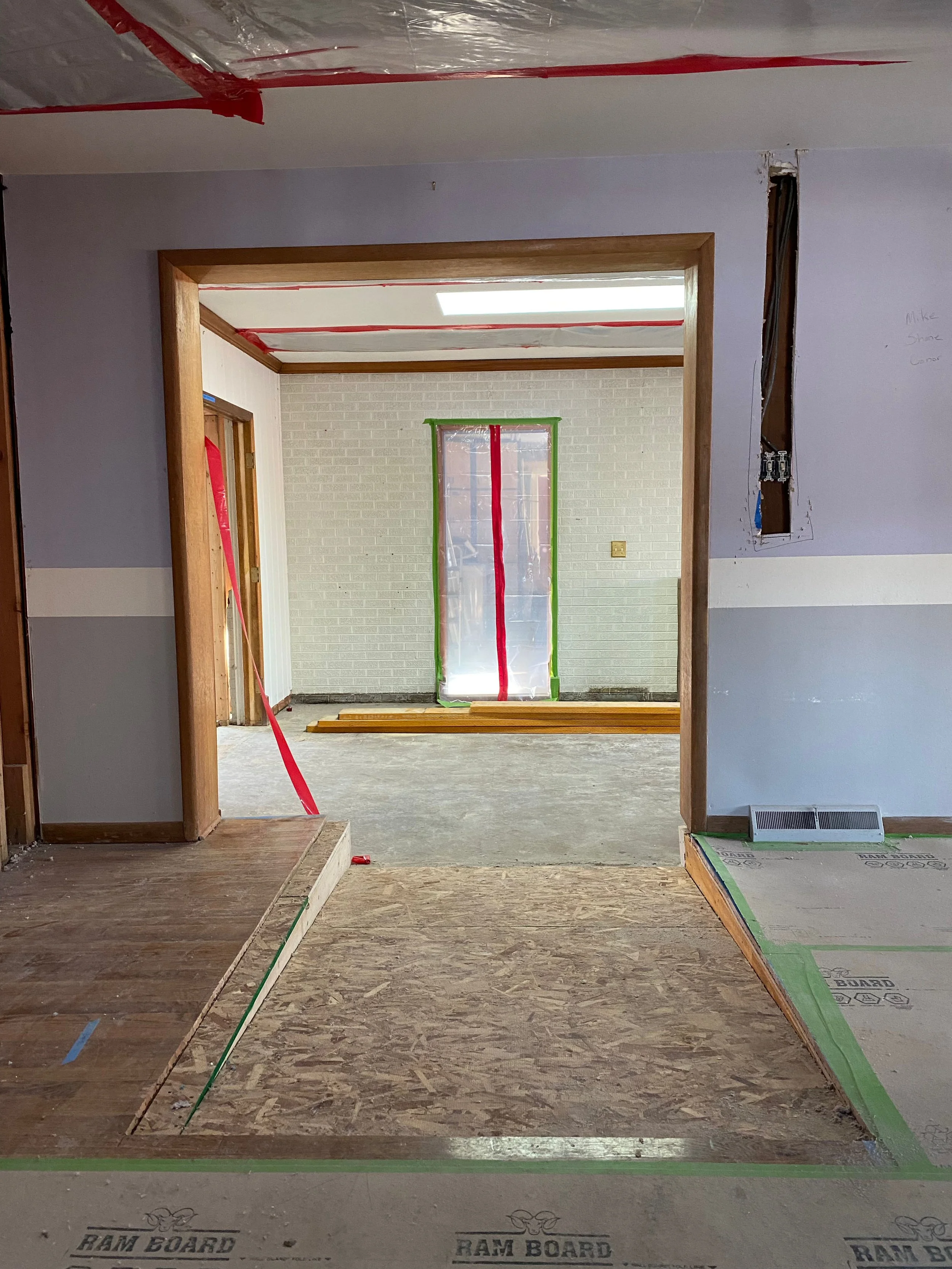
The ramp is in!
The ramp is in! This ramp, right here: THIS is important.
The appliance delivery people asked me yesterday if they need to deliver the appliances up any stairs, and I was thrilled to say,
“No. Not one single stair. “
Mobility is not static
Widening the hallway.
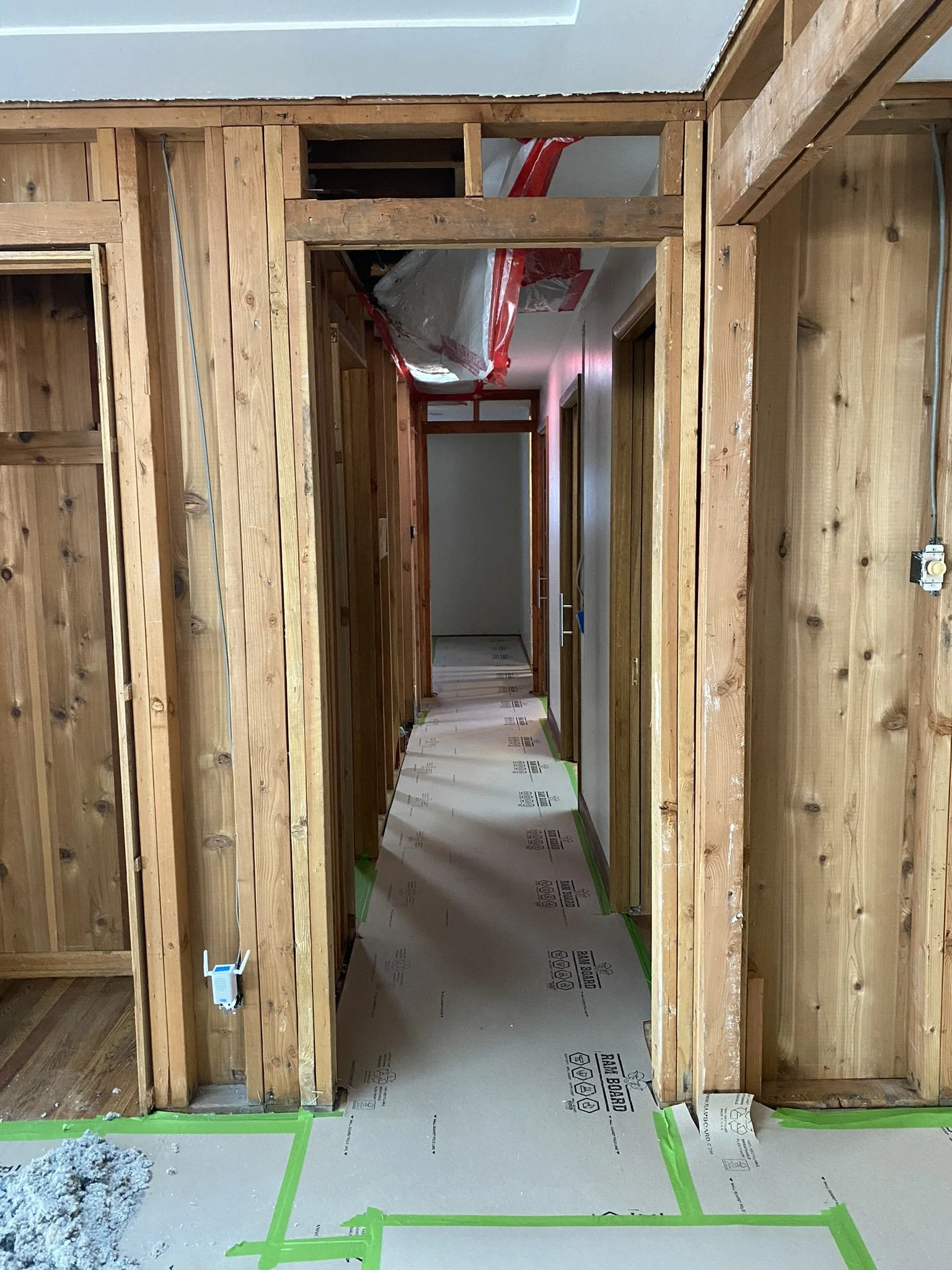
One of the biggest changes we will be making to the house will be the widening of the hallway. At exactly 3’ wide, it was a squeeze to maneuver down the hallway in a wheel chair and then turn to make it through a 30” door. Our new hallway will be 4’ wide, with 3’ wide pocket doors entering into the rooms. This widening is a predictable change.
However, we’ve also been thinking about types of mobility, not just the wheel chair type. Sometimes, it’s nice to have a space that is not too big - especially if you want to reach out and lean against a wall for support. We think about how Ann loved her U-shaped “two butt kitchen” which had ample counter space for grabbing a hold whenever you need it. We think of the occupational therapists who asked about “furniture walking” in the early days of the disease. We hope to accommodate mobility beyond a single stage. We think that will be a little less predictable - and we look forward to sharing what we’ve come up with.